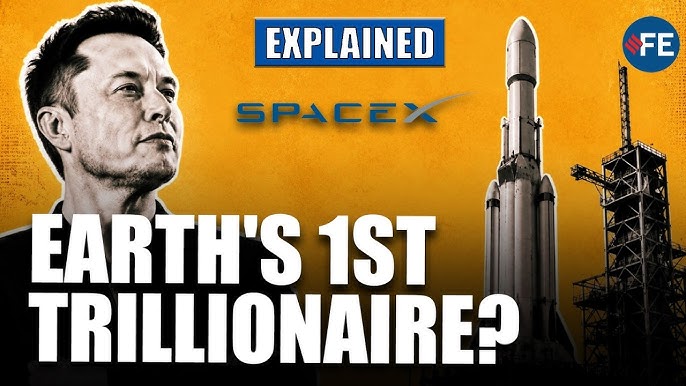
A boy in South Africa who kept asking one question: what if the future could be rebuilt from scratch?
Elon Musk was born in 1971 in Pretoria, South Africa.
He was not known as a child prodigy in the traditional sense, but he was deeply consumed by books, computers, and ideas that stretched far beyond his environment.
While most children were focused on daily school life, Musk was immersed in science fiction, programming logic, and questions about space, energy, and civilization itself. That early curiosity would later become the foundation of one of the most aggressive entrepreneurial journeys in modern history.
Leaving South Africa: The First Escape Toward a Bigger World
In his late teens, Musk made a critical decision.
He left South Africa and moved to Canada.
The move was not just geographical. It was strategic.
Canada offered access to education, mobility, and a pathway into the United States, where global technology revolutions were beginning to form.
He enrolled at Queen’s University before transferring to the University of Pennsylvania, where he studied physics and economics.
This combination mattered.
Physics trained him to think in systems and first principles.
Economics trained him to think in scale, markets, and leverage.
Most entrepreneurs master one. Musk started building both at the same time.
The First Breakthrough: Internet Money and Zip2
In the 1990s, during the early internet wave, Musk dropped out of Stanford just two days into a PhD program.
He instead chose action over academia.
He co-founded Zip2, a software company that helped newspapers build online business directories and maps.
The company was eventually sold for nearly $300 million.
For Musk, this was not the end goal. It was proof of concept.
He had learned something critical: software could scale faster than anything in history.
PayPal: The First Real Explosion of Capital
After Zip2, Musk co-founded X.com, an online banking and payments company.
It later became PayPal.
When eBay acquired PayPal in 2002, Musk earned over $100 million from the deal.
At this point, he had a choice.
He could have retired into comfort.
Instead, he made one of the most unusual decisions in modern business history: he reinvested almost everything into extremely high-risk physical industries.
SpaceX: Betting Everything on Impossible Rockets
In 2002, Musk founded SpaceX with one goal:
Make humanity a multiplanetary species.
The early years were brutal.
Rocket failures, financial strain, and constant skepticism nearly destroyed the company.
But persistence led to breakthroughs that changed global aerospace economics, especially reusable rocket technology.
SpaceX eventually became one of the most valuable private companies in the world.
Tesla: The Risk That Changed Global Energy
Around the same period, Musk became heavily involved in Tesla, an electric vehicle company that was struggling financially.
He invested, took leadership control, and pushed the company through production crises that nearly ended it multiple times.
Tesla eventually became a global leader in electric vehicles, forcing traditional car manufacturers to shift toward electrification.
This single bet reshaped the entire auto industry.
Expansion Phase: AI, Energy, Neural Tech, and Communication
Beyond Tesla and SpaceX, Musk expanded into multiple frontier industries.
Artificial intelligence through xAI
Energy systems through Tesla Energy
Neural interfaces through Neuralink
Communication infrastructure through satellite networks
Each venture followed a similar pattern:
High risk
High skepticism
Long timelines
Massive eventual disruption
The Wealth Acceleration: Early 2020s to 2026
By the early 2020s, Musk’s wealth began compounding at unprecedented levels.
The key drivers were:
Tesla’s massive market capitalization growth
SpaceX private valuation surges
Expansion into multiple technology sectors
Increasing ownership concentration in breakthrough companies
His net worth moved beyond traditional billionaire classifications, entering territory never previously recorded in modern finance.
2026: The Trillionaire Threshold
By 2026, after continued growth in Tesla’s global dominance and SpaceX’s expansion in space infrastructure and satellite internet, Musk’s combined holdings pushed him past the trillion-dollar mark.
He became the first individual in recorded history to reach trillionaire status.
The Real Pattern Behind the Numbers
The story is not just about wealth accumulation.
It is about a consistent pattern:
Choosing long-term problems over short-term comfort
Entering industries others considered too difficult or too early
Reinvesting capital instead of consuming it
Compounding risk with execution over decades
From Pretoria to planetary-scale engineering, the trajectory stayed focused on one idea:
Build systems that extend human civilization beyond its current limits.
He was not known as a child prodigy in the traditional sense, but he was deeply consumed by books, computers, and ideas that stretched far beyond his environment.
While most children were focused on daily school life, Musk was immersed in science fiction, programming logic, and questions about space, energy, and civilization itself. That early curiosity would later become the foundation of one of the most aggressive entrepreneurial journeys in modern history.
Leaving South Africa: The First Escape Toward a Bigger World
In his late teens, Musk made a critical decision.
He left South Africa and moved to Canada.
The move was not just geographical. It was strategic.
Canada offered access to education, mobility, and a pathway into the United States, where global technology revolutions were beginning to form.
He enrolled at Queen’s University before transferring to the University of Pennsylvania, where he studied physics and economics.
This combination mattered.
Physics trained him to think in systems and first principles.
Economics trained him to think in scale, markets, and leverage.
Most entrepreneurs master one. Musk started building both at the same time.
The First Breakthrough: Internet Money and Zip2
In the 1990s, during the early internet wave, Musk dropped out of Stanford just two days into a PhD program.
He instead chose action over academia.
He co-founded Zip2, a software company that helped newspapers build online business directories and maps.
The company was eventually sold for nearly $300 million.
For Musk, this was not the end goal. It was proof of concept.
He had learned something critical: software could scale faster than anything in history.
PayPal: The First Real Explosion of Capital
After Zip2, Musk co-founded X.com, an online banking and payments company.
It later became PayPal.
When eBay acquired PayPal in 2002, Musk earned over $100 million from the deal.
At this point, he had a choice.
He could have retired into comfort.
Instead, he made one of the most unusual decisions in modern business history: he reinvested almost everything into extremely high-risk physical industries.
SpaceX: Betting Everything on Impossible Rockets
In 2002, Musk founded SpaceX with one goal:
Make humanity a multiplanetary species.
The early years were brutal.
Rocket failures, financial strain, and constant skepticism nearly destroyed the company.
But persistence led to breakthroughs that changed global aerospace economics, especially reusable rocket technology.
SpaceX eventually became one of the most valuable private companies in the world.
Tesla: The Risk That Changed Global Energy
Around the same period, Musk became heavily involved in Tesla, an electric vehicle company that was struggling financially.
He invested, took leadership control, and pushed the company through production crises that nearly ended it multiple times.
Tesla eventually became a global leader in electric vehicles, forcing traditional car manufacturers to shift toward electrification.
This single bet reshaped the entire auto industry.
Expansion Phase: AI, Energy, Neural Tech, and Communication
Beyond Tesla and SpaceX, Musk expanded into multiple frontier industries.
Artificial intelligence through xAI
Energy systems through Tesla Energy
Neural interfaces through Neuralink
Communication infrastructure through satellite networks
Each venture followed a similar pattern:
High risk
High skepticism
Long timelines
Massive eventual disruption
The Wealth Acceleration: Early 2020s to 2026
By the early 2020s, Musk’s wealth began compounding at unprecedented levels.
The key drivers were:
Tesla’s massive market capitalization growth
SpaceX private valuation surges
Expansion into multiple technology sectors
Increasing ownership concentration in breakthrough companies
His net worth moved beyond traditional billionaire classifications, entering territory never previously recorded in modern finance.
2026: The Trillionaire Threshold
By 2026, after continued growth in Tesla’s global dominance and SpaceX’s expansion in space infrastructure and satellite internet, Musk’s combined holdings pushed him past the trillion-dollar mark.
He became the first individual in recorded history to reach trillionaire status.
The Real Pattern Behind the Numbers
The story is not just about wealth accumulation.
It is about a consistent pattern:
Choosing long-term problems over short-term comfort
Entering industries others considered too difficult or too early
Reinvesting capital instead of consuming it
Compounding risk with execution over decades
From Pretoria to planetary-scale engineering, the trajectory stayed focused on one idea:
Build systems that extend human civilization beyond its current limits.